Northeastern Ontario
As told by Ditch
Cobalt: the silver boom that shaped Canadian mining, and the town that never grew back
In 1909, ten thousand people lived here chasing a silver strike. Fewer than a thousand live here now. The silver is mostly gone. The town isn't.
With an hour, walk Silver Street to the Cobalt Mining Museum, which holds what the museum calls the world's largest display of native silver ore, then look up at the headframes around town. With a day, drive the Heritage Silver Trail, a self-guided loop of old mine and mill sites. Season note: the underground Colonial Adit tour is closed for the season right now, so check with the museum before you build a day around it.
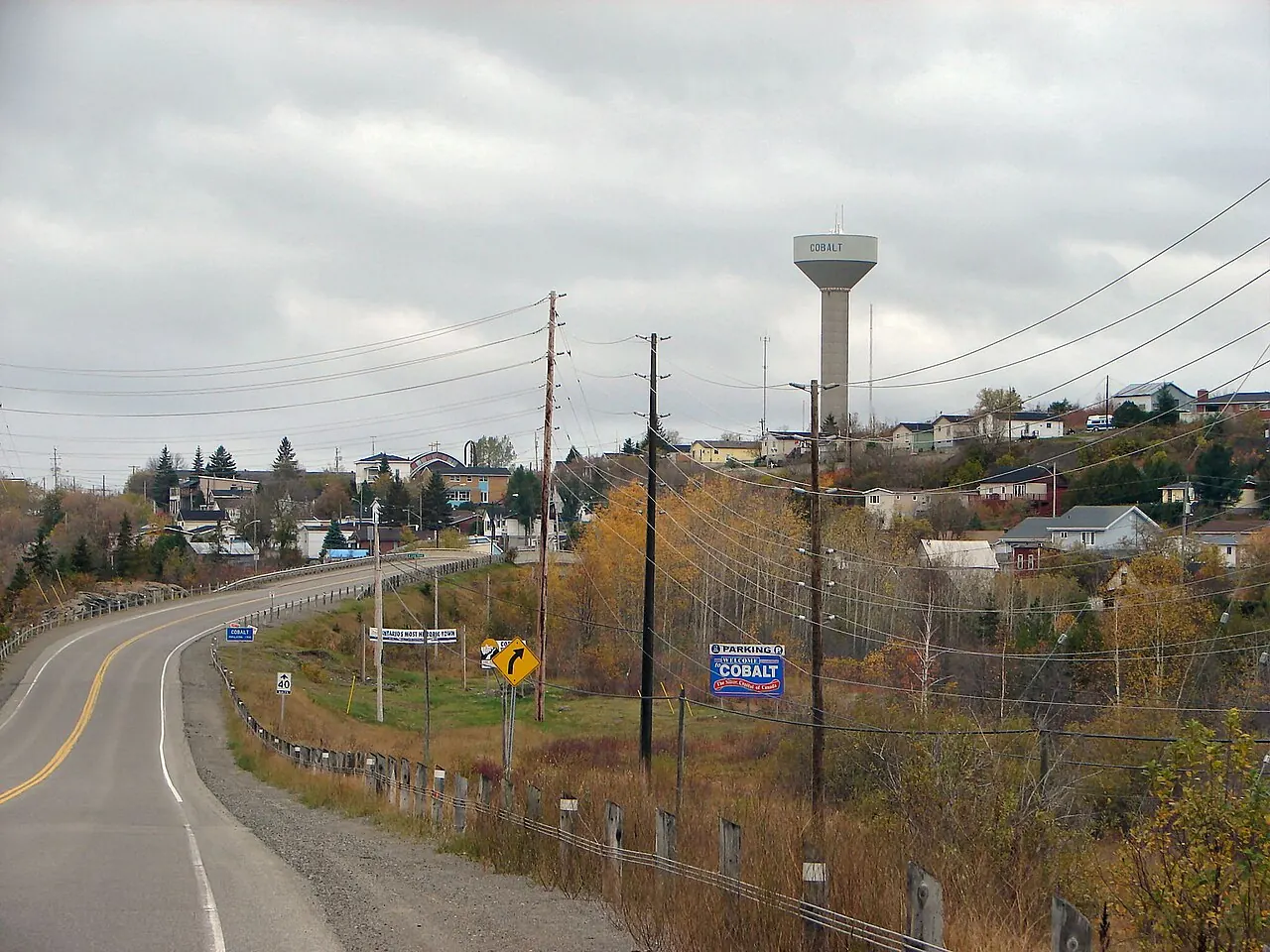
Cobalt sits on Highway 11B, a short detour off the main highway between North Bay and Temiskaming Shores, and almost nobody takes it. That's the whole reason to take it.
Getting to Cobalt from Highway 11
Highway 11B leaves Highway 11 in Coleman Township and carries on into Cobalt, then to Temiskaming Shores.
| From | Distance | Drive |
|---|---|---|
| Latchford | 14 km | about 15 min |
| New Liskeard | 16 km | about 20 min |
| Kirkland Lake | 111 km | about 1 h 25 min |
| North Bay | 145 km | about 1 h 50 min |
| Timmins | 230 km | about 2 h 45 min |
| Cochrane | 242 km | about 2 h 55 min |
Also on Highway 11: Cochrane, 242 km by road.
Routing by Mapbox, no live traffic, checked September 2026. Add time for weather, construction and stops.
Things to do in Cobalt
The Cobalt silver rush
Rock · geology & mining- Plan for
- 5 to 10 minutes to take in, longer if you read every plaque
- Access
- Parks Canada publishes no accessibility information for the national historic site, which covers parts of the town and Coleman Township rather than one site you walk through
- Best for
- All ages, history buffs especially
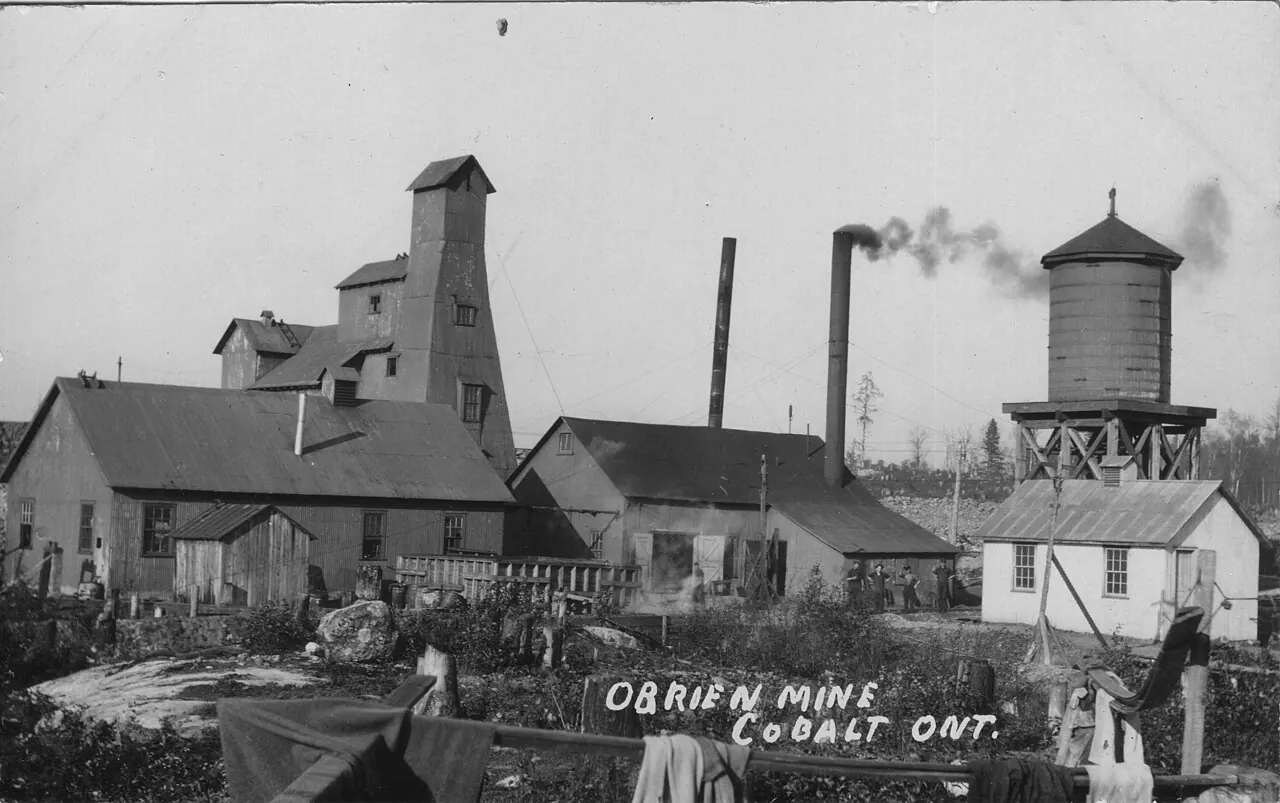
Silver was found by accident in 1903, during construction of the railway, and over the decades that followed, the camp produced more than 400 million ounces of it. The area was designated the Cobalt Mining District National Historic Site in 2002. Parks Canada credits the district with the evolution of hard rock mining and calls Cobalt the silver capital of the world. Then the ore ran thin. The population reached about 10,000 by 1909 and is under 1,000 today.
Cobalt Mining Museum
Rock · geology & mining- Plan for
- about 30 to 45 minutes above ground, and about an hour for the underground tour when it is running (estimates)
- Access
- Halls are wide enough for small motorized mobility scooters and manual mobility aids, and the adit has no bracing bars. Service animals are welcome anywhere in the museum open to the public, with discretion in the adit. Entrance, steps and washrooms are not published: phone 705-679-8301
- Best for
- School-age kids and up, mining and geology fans
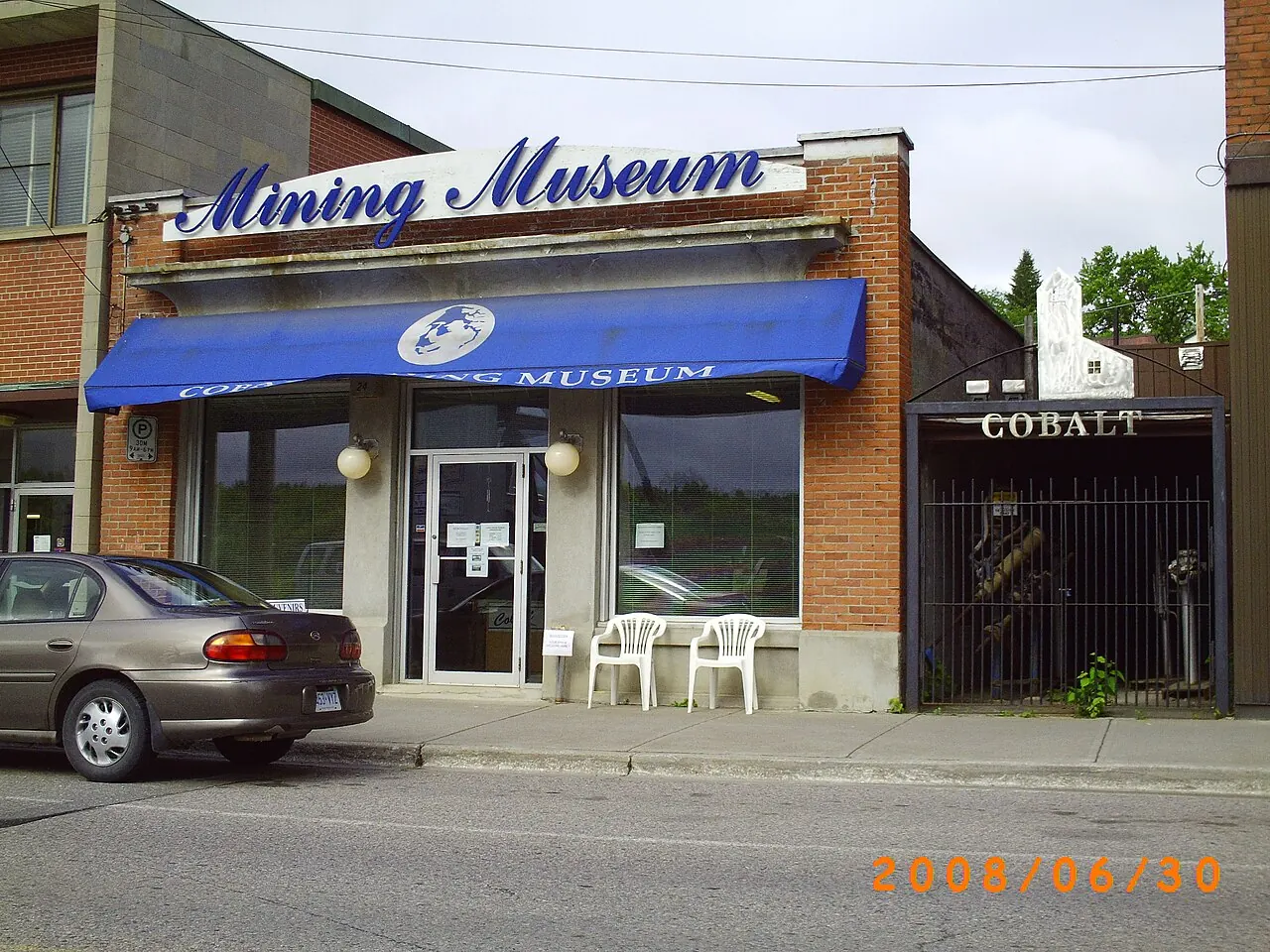
The museum says it has the world's largest display of native silver ore. Underground tours go into the Colonial mine adit and run about an hour. The museum does not publish the months of its season, and the tour was shut for the season when this guide was checked, so ask before you count on it. Hard hats are handed out, the air runs as cool as 5 degrees, and the ground underfoot is wet.
The Group of Seven in Cobalt
Chalk · art & craft- Plan for
- 5 minutes to read
- Access
- There is no site to visit here, so no accessibility information applies
- Best for
- Art and history fans, adults
Franklin Carmichael and A.Y. Jackson, both founding members of the Group of Seven, painted Cobalt directly: Carmichael's "A Northern Silver Mine" in 1930, Jackson's "Ontario Mining Town, Cobalt" in 1933. The McMichael Canadian Art Collection's exhibition about Cobalt and the Canadian imagination lists both. The exhibition page is the place to start if you want to see the paintings themselves.
Cobalt: A Mining Town and the Canadian Imagination, McMichael Canadian Art Collection
The 1909 Cobalt Fire and Casa Loma
Talk · museums & history- Plan for
- 5 minutes, a driving-through story more than a single stop
- Access
- No fire marker or site could be confirmed, so this is a story to carry while you walk the public sidewalks downtown, not a place to stand
- Best for
- Adults and history buffs
In July 1909 a fire started in a Chinese restaurant and swept through Cobalt. It destroyed 150 buildings and forced 3,000 people from their homes. The town had no running water and no firefighting equipment, and that is the part that explains the scale, wherever the first flame started. The town was rebuilt, and the silver boom ran into the 1920s. Henry Pellatt, a Toronto financier, formed the Cobalt Lake Mining Company in 1906, and the Dictionary of Canadian Biography says it made him substantially wealthy. Pellatt also built Casa Loma in Toronto, which he financed from several sources, not from Cobalt alone.
Heritage Silver Trail
Flock · trails & nature- Plan for
- Allow an hour or two by car, less if you pick a few stops
- Access
- Nothing is published on surfaces or gradients. Only the officially numbered sites are approved for safe public access, and missing numbers are sites now closed to the public
- Best for
- All ages who enjoy a scenic drive, mining history fans
A self-guided driving loop that started as a six-kilometre route and has since grown to about four times that size, connecting former mine and mill sites around town, numbered 1 to 20 with gaps where a site has been closed. It is self-guided, all of it outdoors. Pick up the booklet and map at the museum, the post office at 22 Silver Street or White Mountain Publications at 8 Prospect Avenue.
Parking, washrooms and what's open
Checked September 20, 2026. Rates, hours and seasons change, so use the links in the local links below before you rely on them.
Checked on 20 September 2026 against the Cobalt Mining Museum, Town of Cobalt, Parks Canada, the Cobalt Historical Society, the Canadian Mining Journal and Wikipedia for population. Nothing here comes from a visit.
- Parking
- The Town of Cobalt and the museum publish no parking rules, fees or time limits, so read the signs when you get there. The Cobalt Historical Society's Heritage Silver Trail page mentions a parking area at each numbered site.
- Public washrooms
- No official Cobalt source names a public washroom. The museum site does not mention washrooms, and the Town's parks page covers Teck Park's fields, splash pad and playground without listing any. Plan on the museum during its open hours, and ask on 705-679-8301, the number on the museum's own site.
- Season and hours
- The museum's own site gives September 2026 hours of Wednesday to Sunday, 10am to 4pm, with admission $8 plus tax for adults and $6 for seniors and students, free under 6. No winter schedule is published, and the Town of Cobalt says hours are seasonal, so call 705-679-8301.
- Underground tour
- The Colonial Adit tour showed CLOSED FOR THE SEASON on the museum's tours page on 20 September 2026, and the months of its season are not published. In season the museum lists three tours a day, seven days a week, at 10am, 1pm and 3pm, one hour, $20 plus tax for adults. Phone 705-679-8301.
- Accessibility and service animals
- The museum's tours page states that halls are wide enough for small motorized mobility scooters and manual mobility aids, that the adit has no bracing bars, and that service animals are welcome anywhere in the museum open to the public, with discretion in the adit. Entrance steps, washrooms and accessible parking are not published. Phone 705-679-8301.
- The trail and your stamina
- The Heritage Silver Trail is outdoors and self-guided, and the Cobalt Historical Society gives no surface, gradient or distance detail per site. It does say only the officially numbered sites are approved for safe public access, and that missing numbers are sites now closed. Drive it in short hops if stamina is a concern.
- If it rains or turns cold
- The museum galleries are the indoor option while they are open. The Bunker Military Museum at 24 Prospect Avenue is a second one, but its site gives only summer daily hours of 10am to 4pm and asks you to call, so phone (705) 679-5191 first.
- Food
- No Cobalt eating place could be confirmed open on 20 September 2026. Every set of hours found came from third-party listings that disagreed with each other, so nothing is named here as a stop. The City of Temiskaming Shores Where To Eat directory covers Haileybury and New Liskeard, the nearby towns, at https://www.temiskamingshores.ca/recreation-and-culture/where-to-eat/
- Getting there
- Highway 11B leaves Highway 11 in Coleman Township and runs into Cobalt, then on to Temiskaming Shores. New Liskeard is 16 km away, about 20 minutes. North Bay is 145 km, about an hour and 50 minutes. Check Ontario 511 for road conditions in winter.
Every stop, on the map
Some pins overlap because these stops share one location (stops 1, 3 and 5), so their pins stack and only the top one shows. The numbered list below still names every stop.
- The Cobalt silver rush (same spot as 3 and 5)
- Cobalt Mining Museum
- The Group of Seven in Cobalt (same spot as 1 and 5)
- The 1909 Cobalt Fire and Casa Loma
- Heritage Silver Trail (same spot as 1 and 3)
How to spend an hour, a half day or a full day
One hour: park on Silver Street, go through the Cobalt Mining Museum, then walk out and look at what the mines left above the town. Half a day: add the Heritage Silver Trail, a self-guided loop of numbered mine and mill sites, and pick up the booklet and map at the museum, the post office at 22 Silver Street or White Mountain Publications at 8 Prospect Avenue. A full day: drive the whole trail, then eat in Haileybury or New Liskeard, the nearby towns, since no Cobalt eating place could be confirmed open. If it rains or turns cold, the museum galleries are your indoor hour, and the Bunker Military Museum on Prospect Avenue is a second one, so phone before you drive over. The underground tour is shut until the season turns. The headframes are still standing above the town like nobody told them the boom ended.
Local links for planning your stop in Cobalt
Official and regional sources for hours, events and current conditions, since those change faster than a guide can.
- Town of Cobalt
- Heritage Silver Trail guide and map Cobalt Historical Society
- Northeastern Ontario travel guide Destination Northern Ontario
- Ontario 511 road conditions Ministry of Transportation
Every place in this guide
Addresses as published by each place or the town, checked September 20, 2026.
- Cobalt Mining Museum24 Silver Street, Cobalt, ON P0J 1C0Current guide pin kept. Geocoding returned a Silver Street centroid about 120 m away, from one source only, so the building pin is unconfirmed.Open in Google Maps (opens in new tab)
- Colonial Adit tour meeting pointCobalt, ON. The adit itself has no published address; visitors gather at the Cobalt Mining Museum, 24 Silver Street, and follow the museum van in their own vehicleMuseum staff cannot give rides to or from the mine site.Open in Google Maps (opens in new tab)
- Heritage Silver TrailCobalt, ON. A self-guided route with no single addressPinned at the town centre because the route has no single address.Open in Google Maps (opens in new tab)
- Cobalt Mining District National Historic SitePortions of the Town of Cobalt and part of Coleman Township, ONA landscape designation, not a gated site, so it is pinned at the town centre.Open in Google Maps (opens in new tab)
- Cobalt Post Office22 Silver Street, Cobalt, ONHands out the trail booklet. Coordinates are a Silver Street centroid from one source, not a building pin.Open in Google Maps (opens in new tab)
- White Mountain Publications8 Prospect Avenue, Cobalt, ONHands out the trail booklet. No coordinates were obtained for this address, so the town centre pin stands in.Open in Google Maps (opens in new tab)
- The Bunker Military Museum24 Prospect Avenue, Cobalt, ON P0J 1C0Named in the practical block as a rain or cold option. Autumn hours are not published; phone (705) 679-5191. Coordinates from one geocoding source.Open in Google Maps (opens in new tab)
- The Group of Seven in Cobalt (a story, not a place)Cobalt, ON. No single site to visit; see the McMichael Canadian Art Collection's Cobalt exhibition pageIncluded so every stop in this guide is accounted for.Open in Google Maps (opens in new tab)
- The 1909 Cobalt fire (a story, not a place)Cobalt, ON. No marker or site could be confirmed; the story is carried on the downtown sidewalksIncluded so every stop in this guide is accounted for.Open in Google Maps (opens in new tab)


.jpg)
